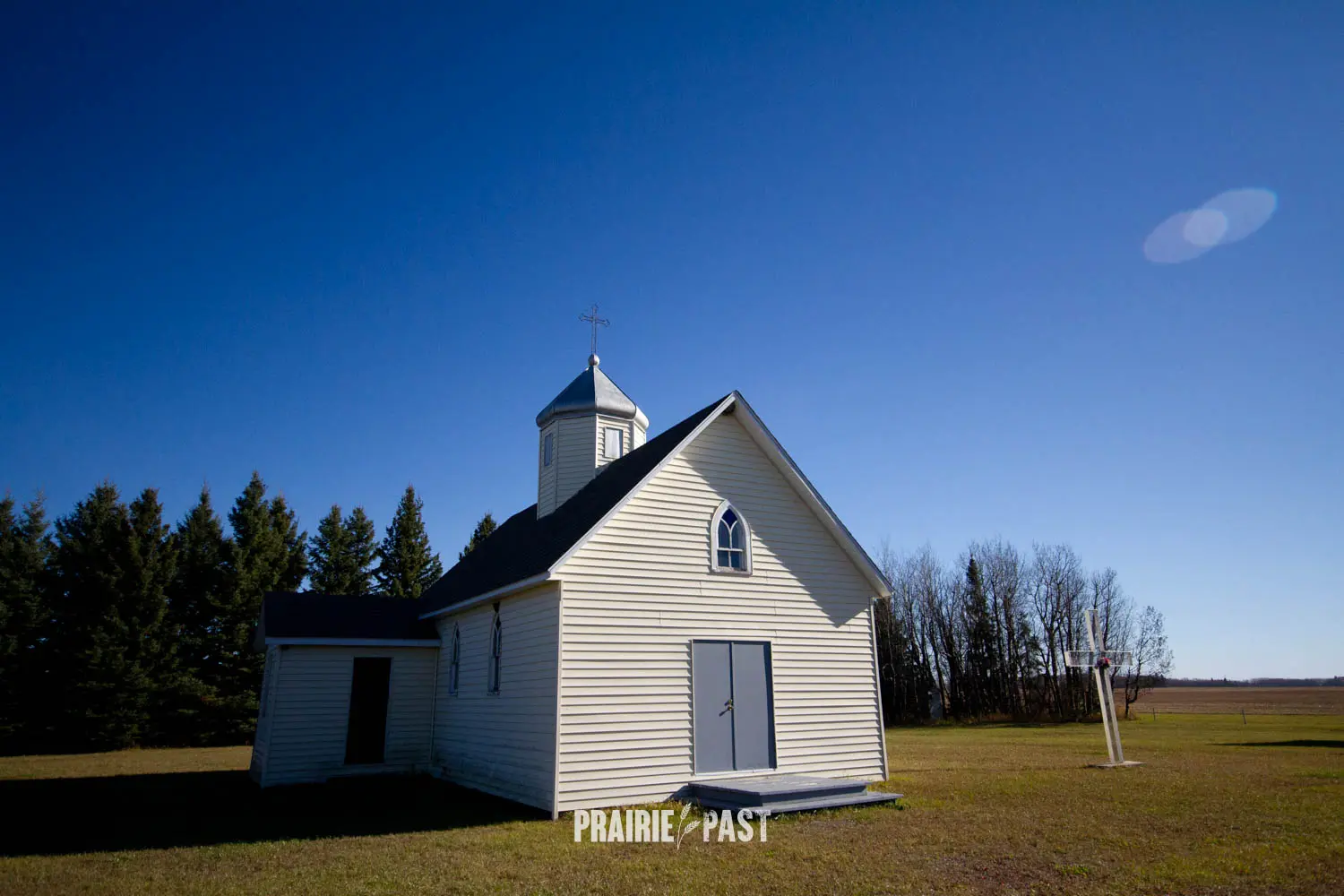
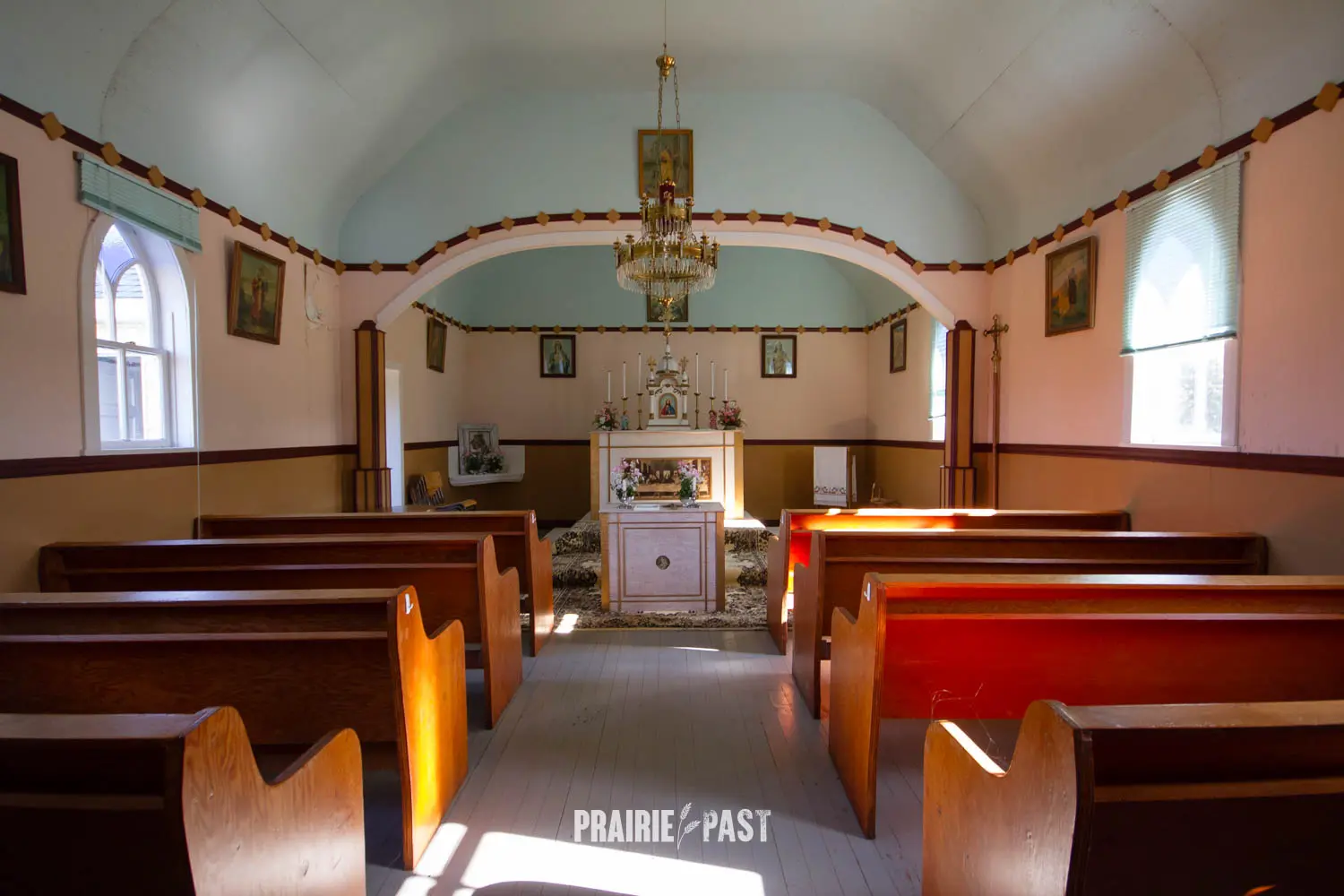
The church of the Ascension of Our Lord Jesus Christ is the first church of the parish. It is known as Nipawin Farms or Silver Pine. Constructed between 1940 and 1941, the modest wooden church was built largely through volunteer labour, with parishioners working together to source materials and complete the structure.
Raw timber for the building was hauled from forests many miles away before being processed into lumber at a local sawmill. Construction began in 1940, and by the following year the church was completed and ready for services. A few years later, additional work was carried out to finish the interior, paint the building, and construct the pews.
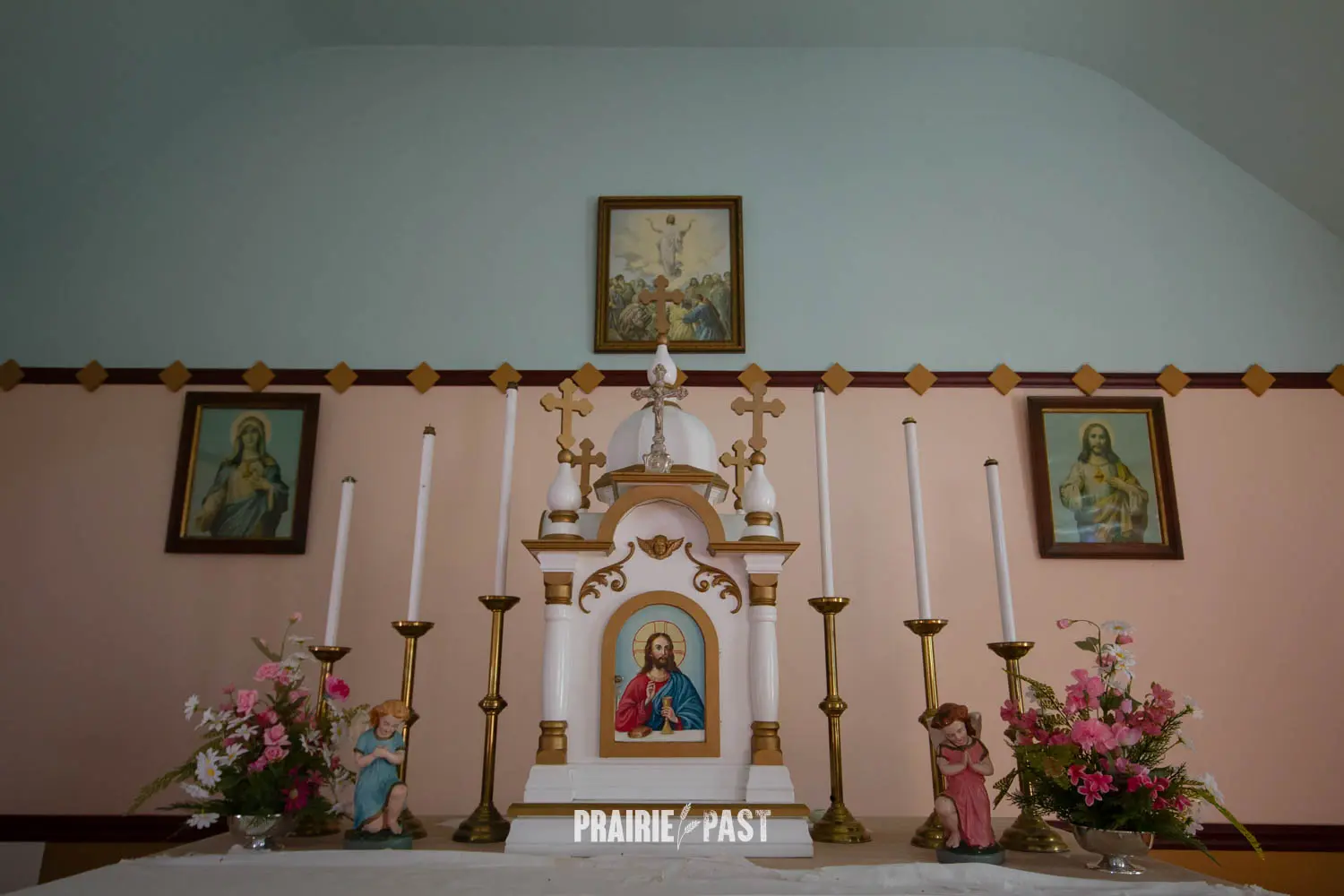
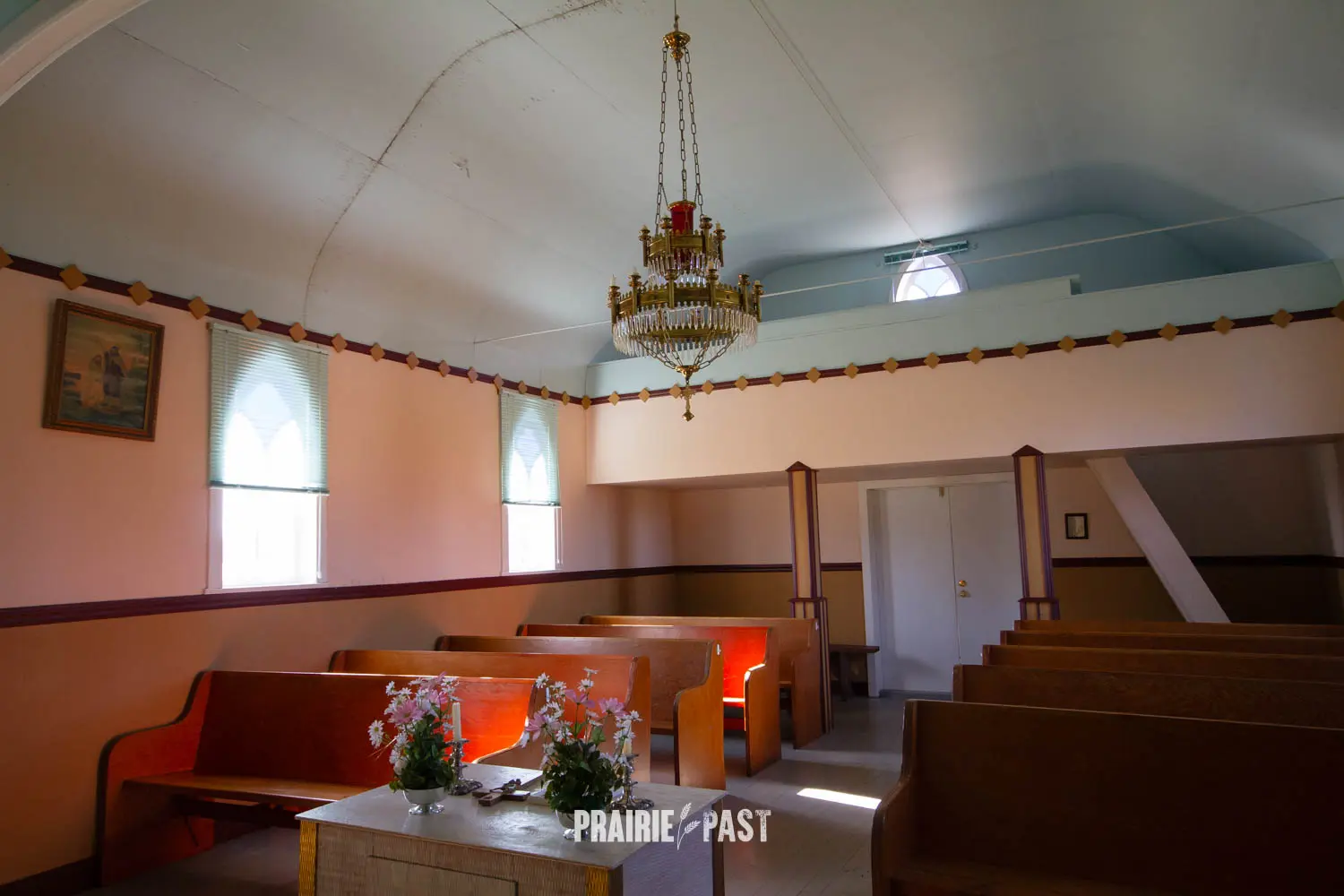
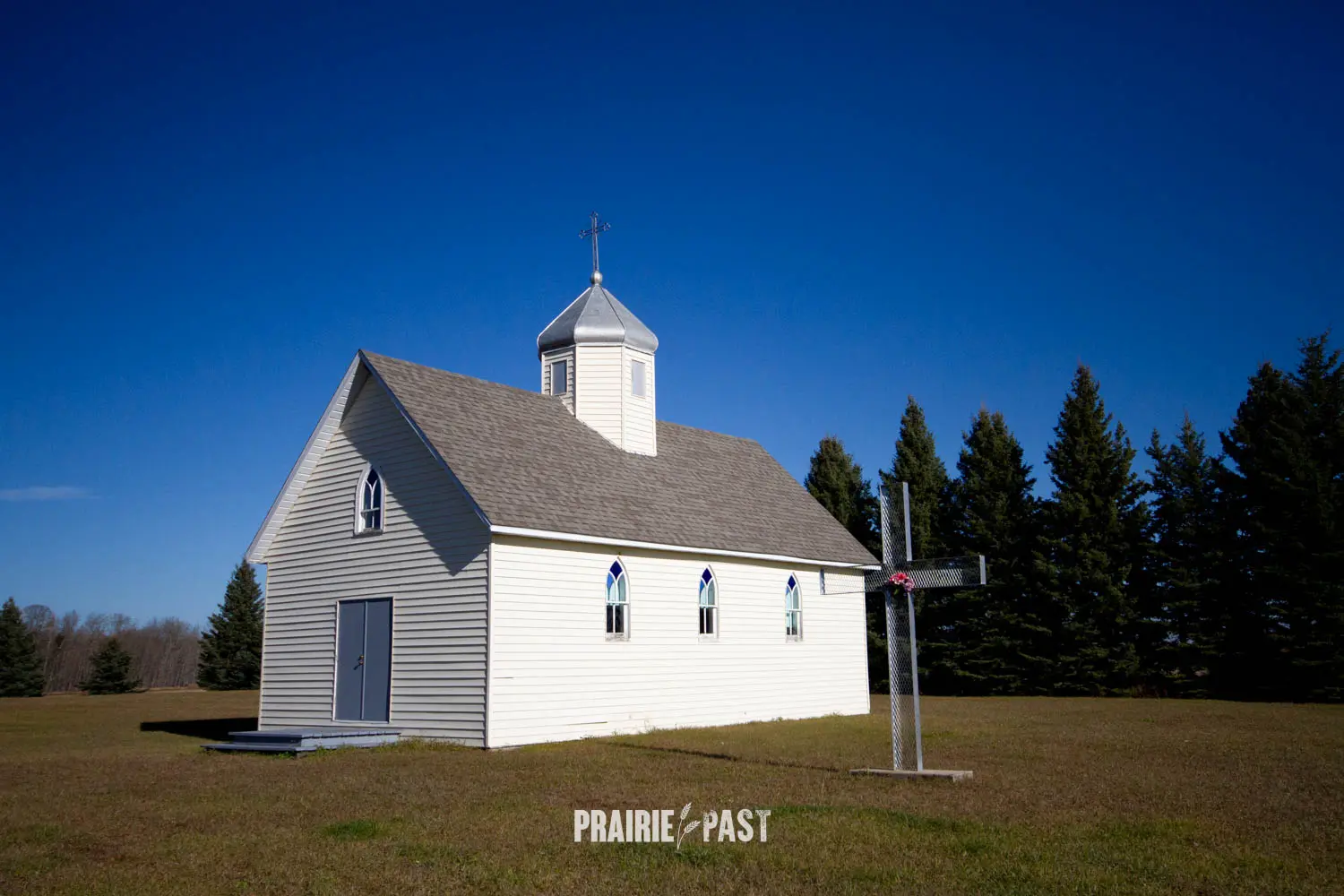
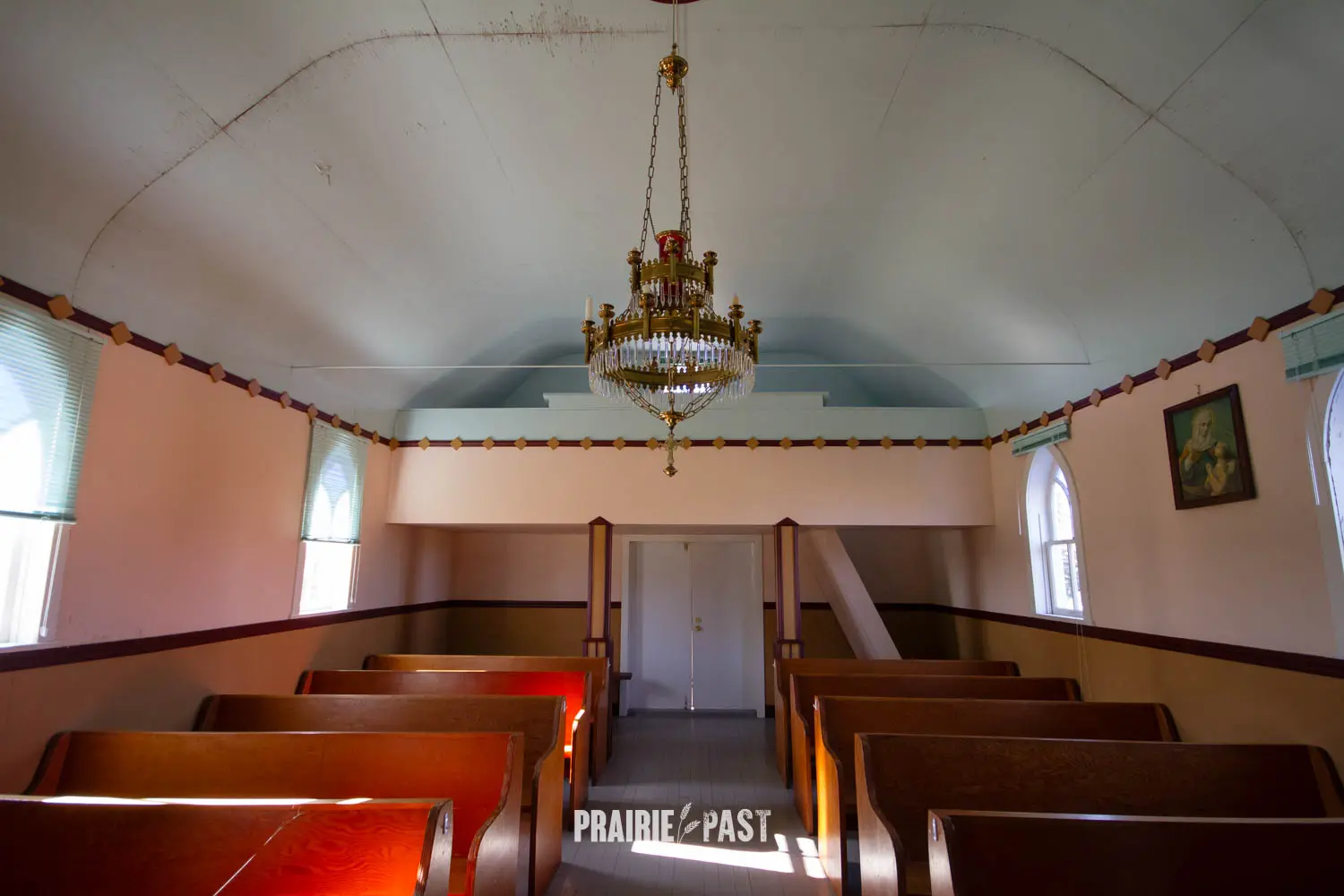
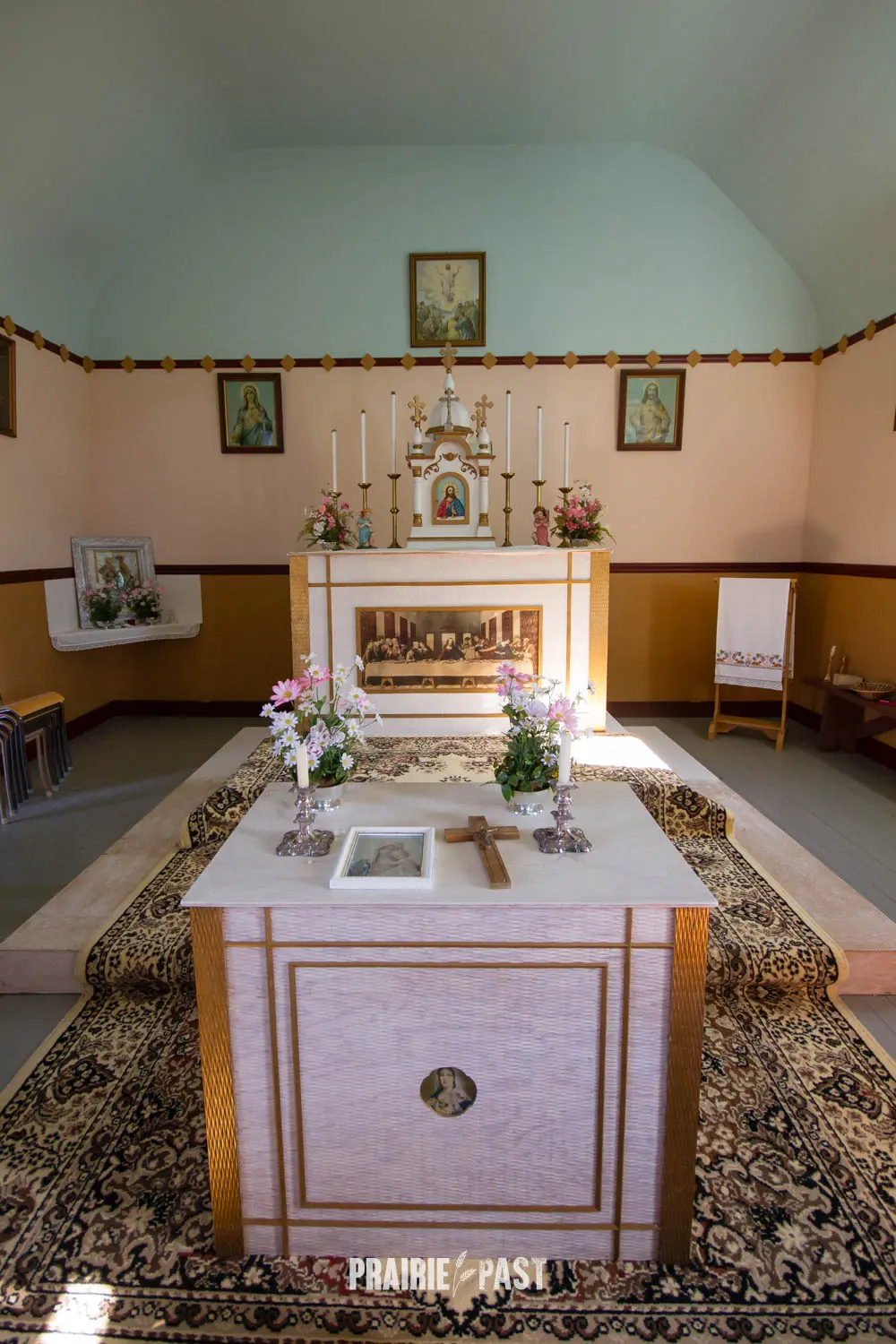
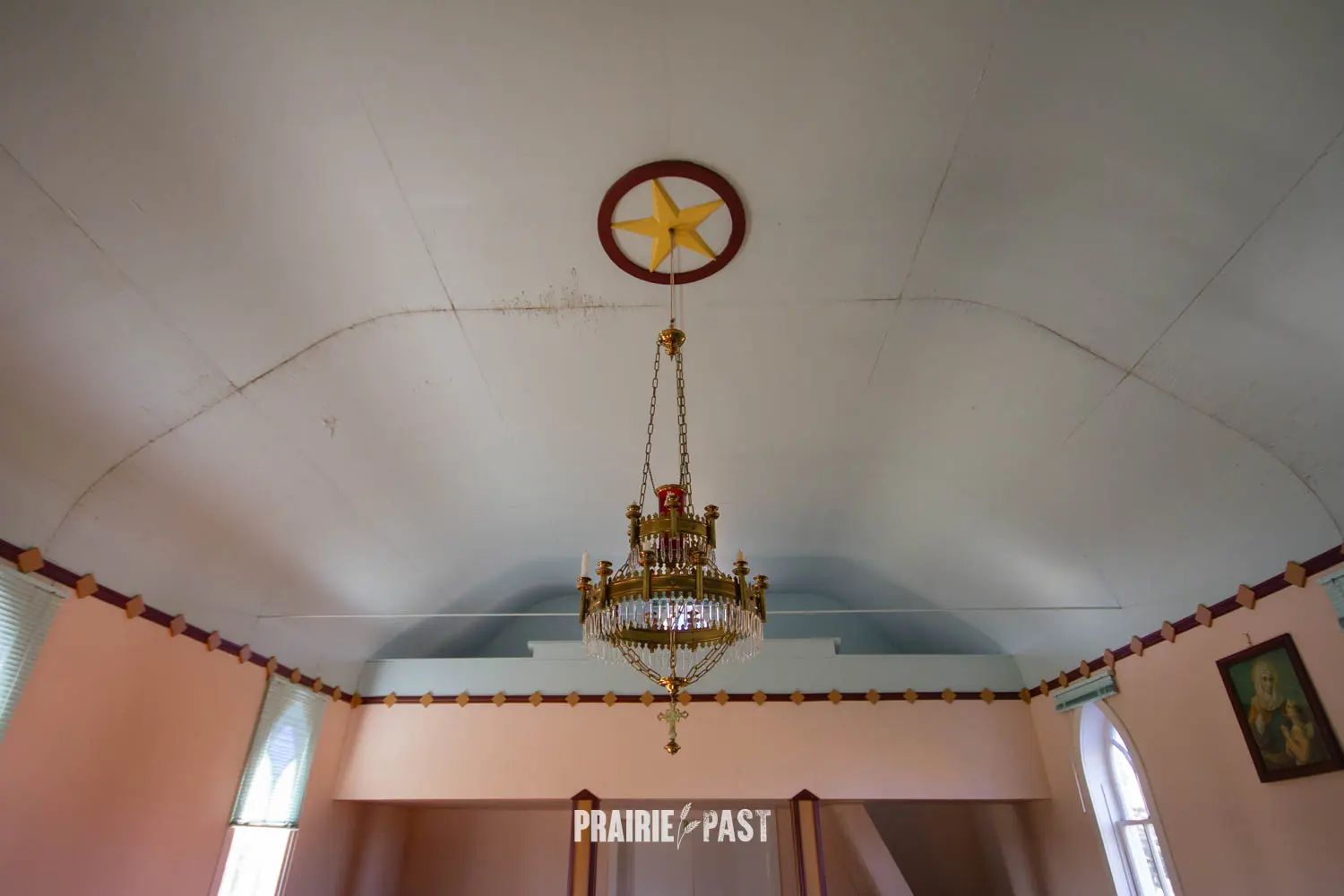
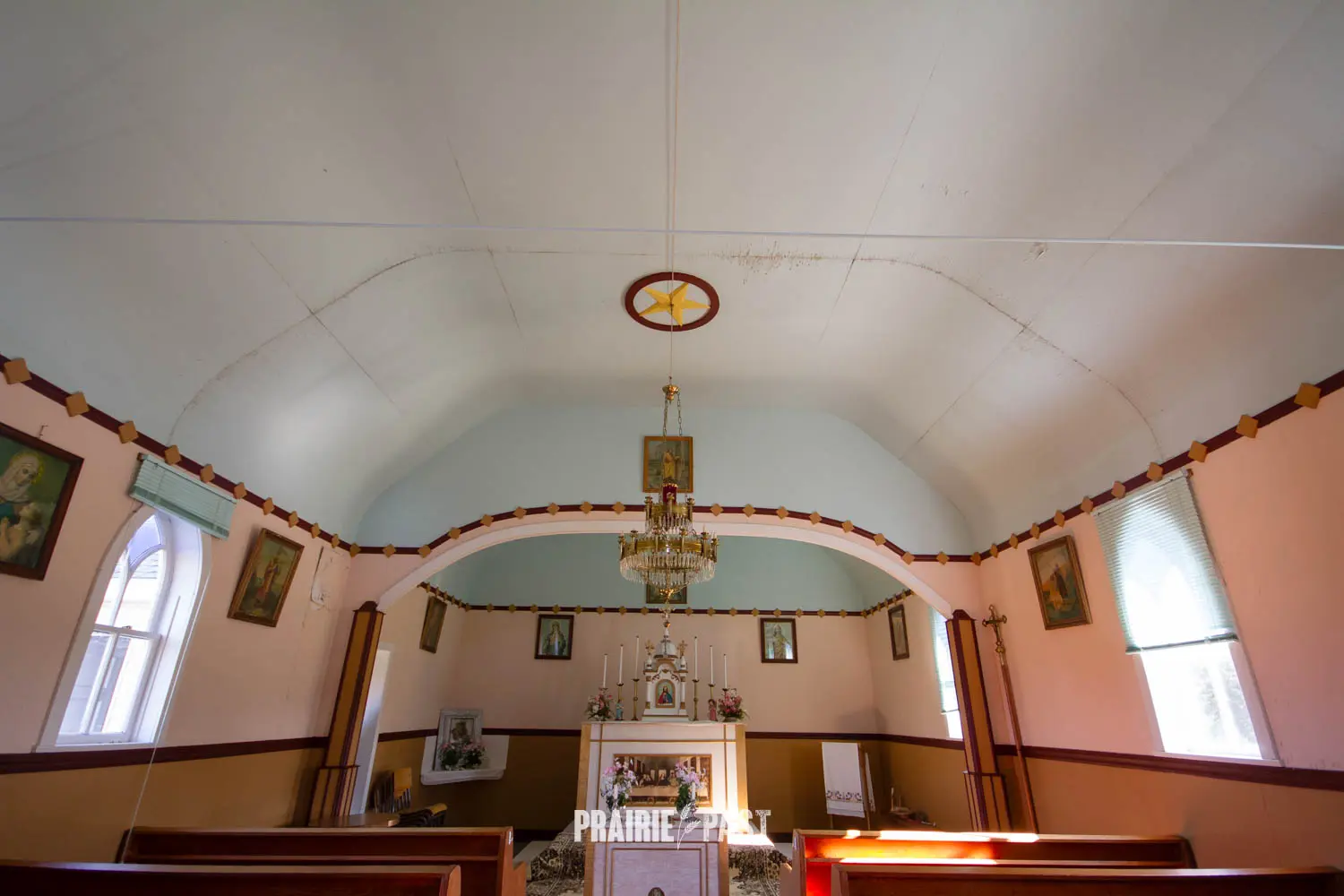
The church itself is east-west orientated, a simple rectangular structure measuring 38 by 32 feet, topped with a shingled gable roof and a small cupola at its peak. Inside, the layout included a main altar, a nave, and a choir loft accessed by a staircase near the entrance. Heating is provided by a cast iron stove, and the interior decoration featured religious prints brought to Canada by early pioneers.
A wooden belfry and mission cross were erected near the church when it was first built, and a parish hall was later added to the property in 1947. Over the years, however, exposure to the elements took its toll. The mission cross collapsed in the 1970s and the belfry followed in the early 1980s. In 2002, the one armed metal cross from All Saints Church in Nipawin was set on a concrete base on the south side of the church, replacing the original wooden metal cross.
Despite these changes, the church remained an important symbol for the community. In 1989, the parish marked its 50th anniversary with restoration work that included repainting the interior, refinishing the pews, replacing the roof shingles, and installing a new entrance gate to the church grounds.
Although the church is no longer used for regular services today, it still holds deep sentimental value for those connected to the parish. The nearby cemetery continues to serve as a reminder of the generations of families who helped build and sustain this small prairie church.