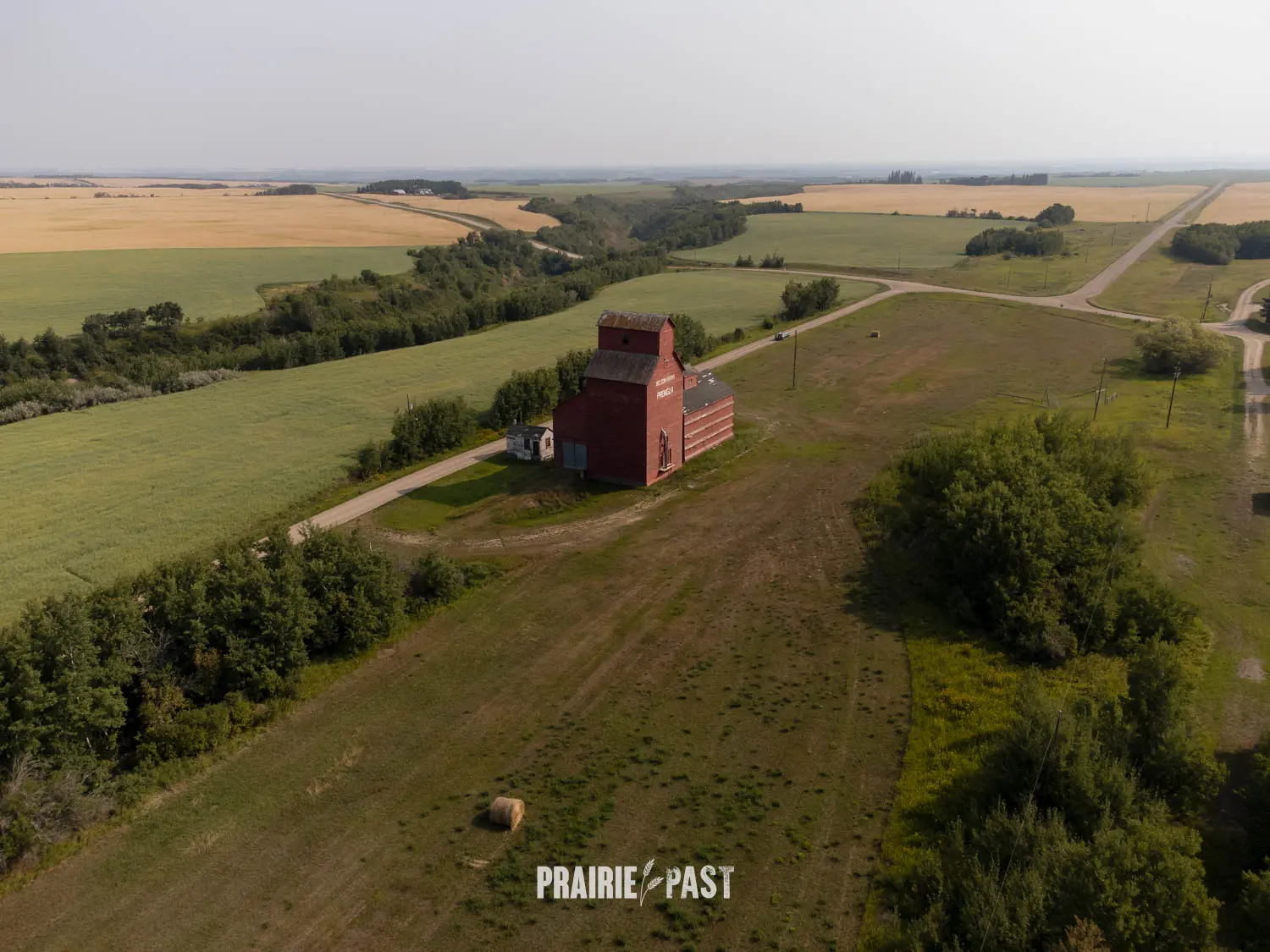
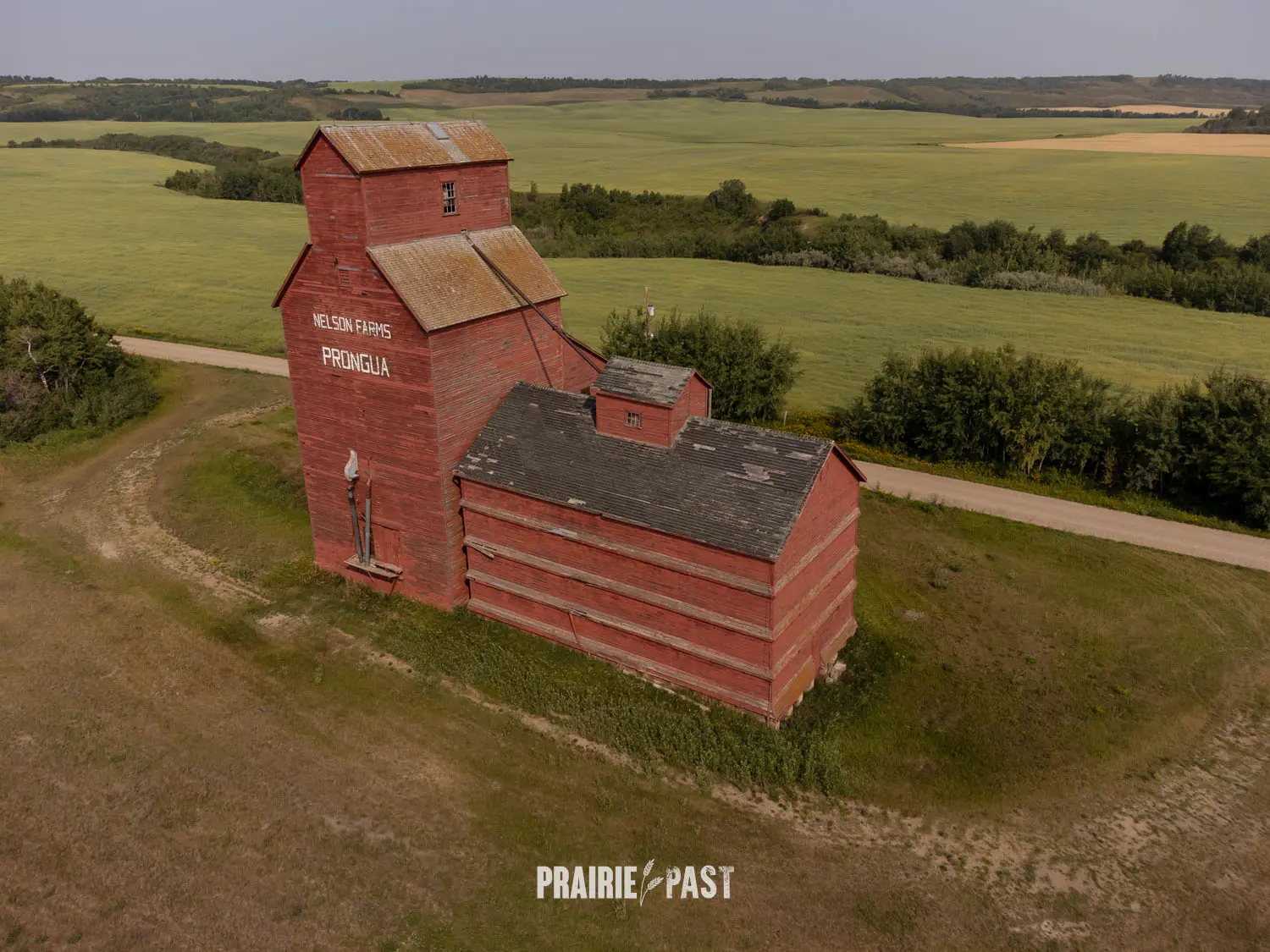
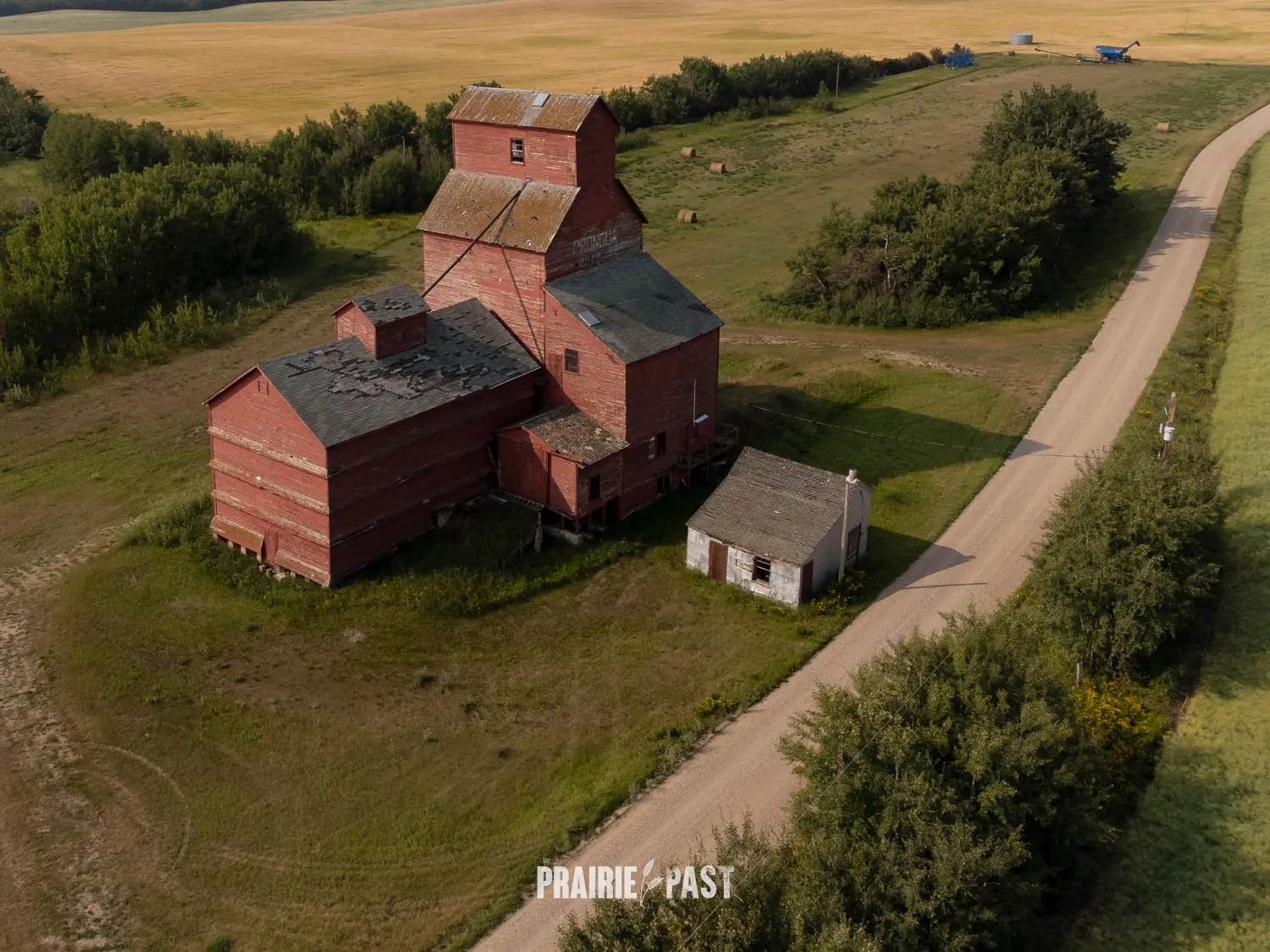
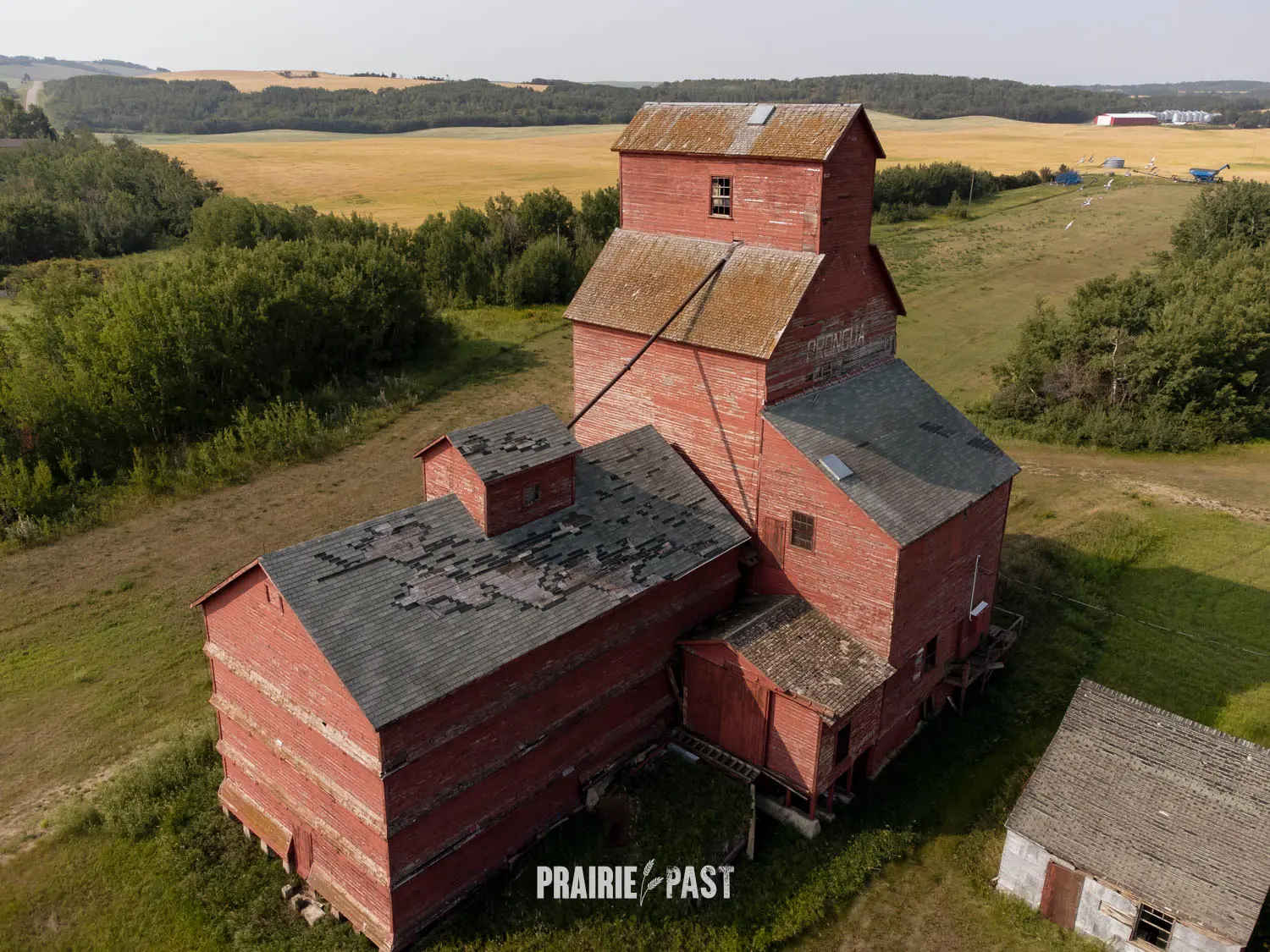
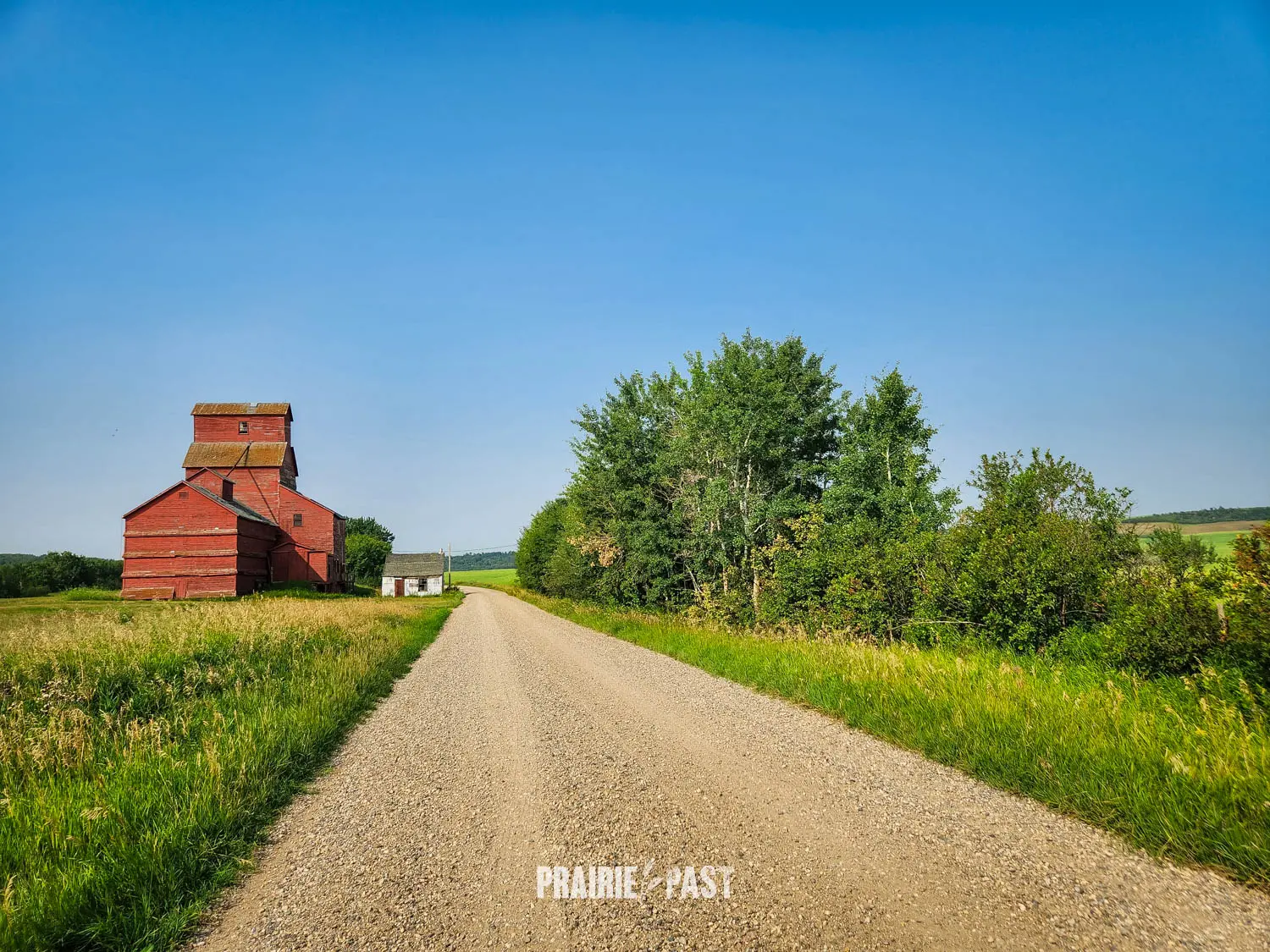
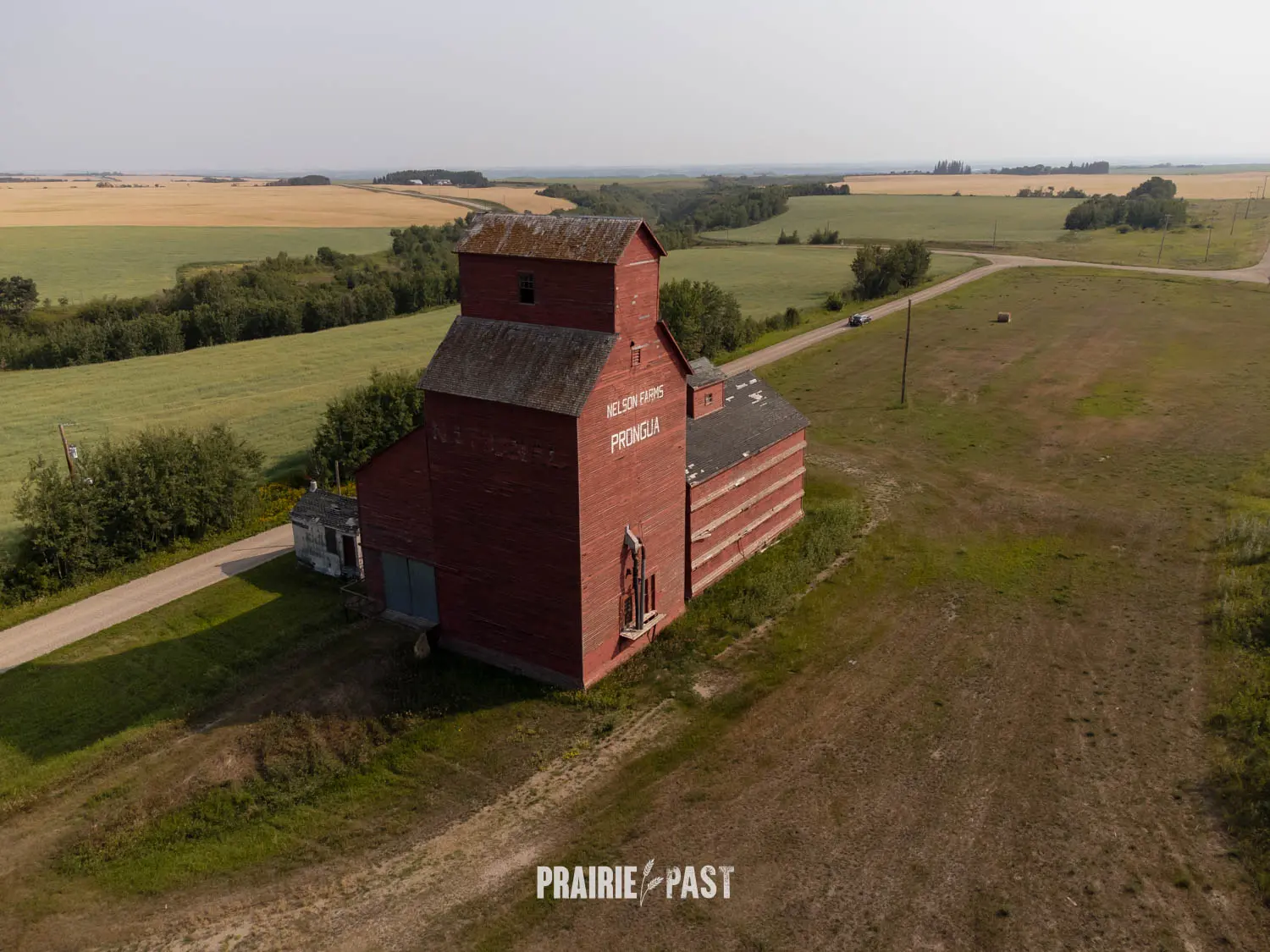
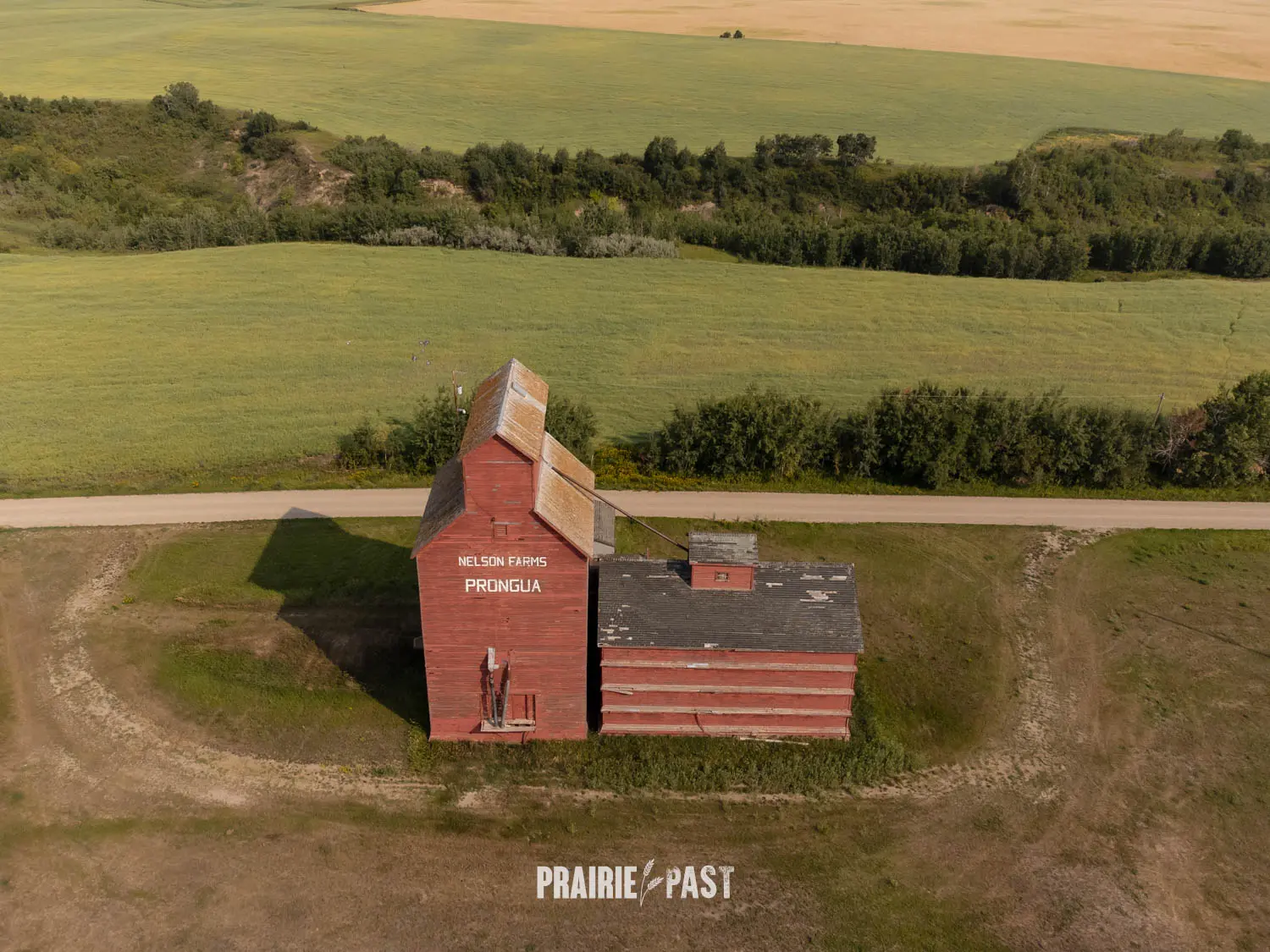
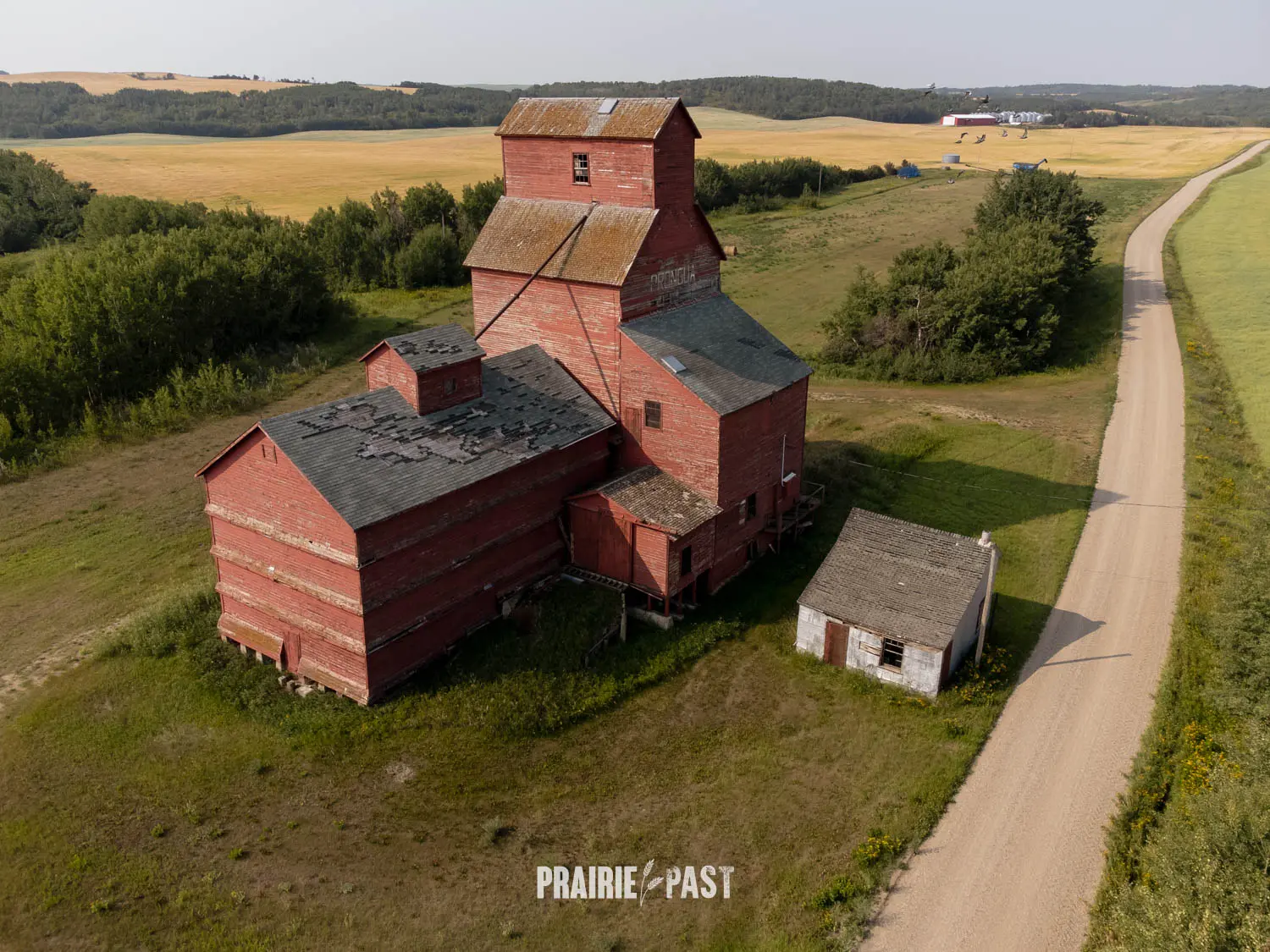
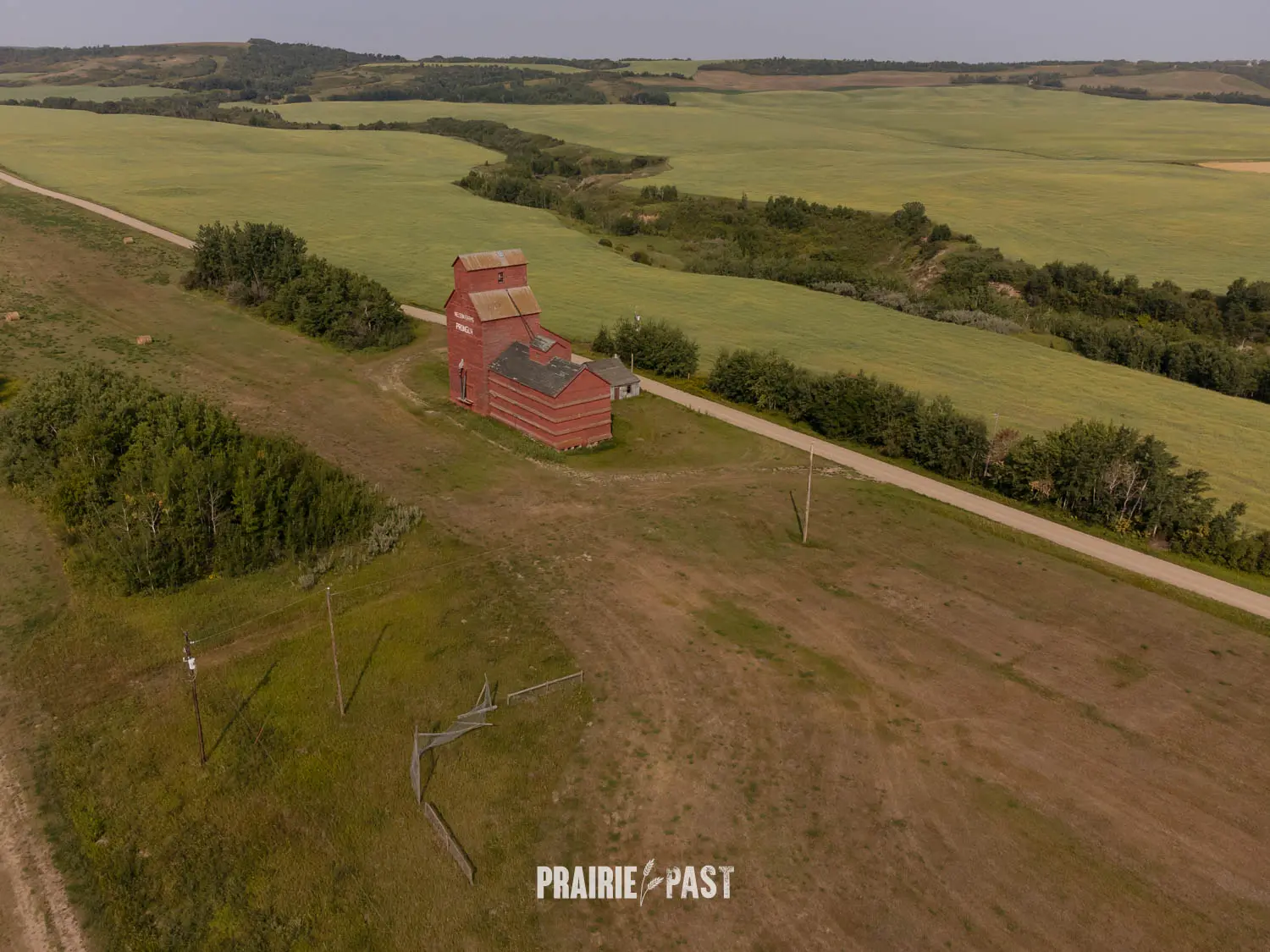
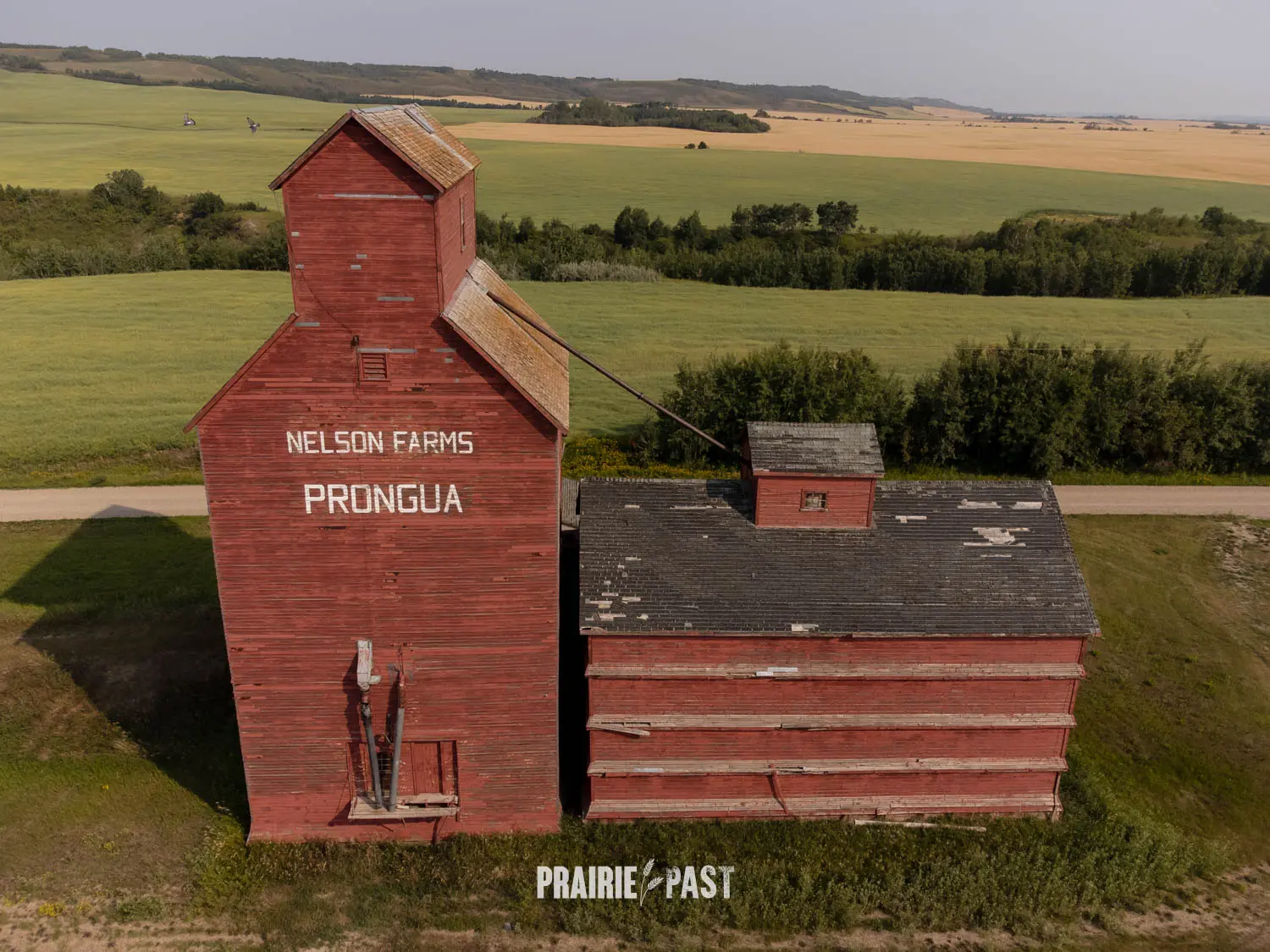
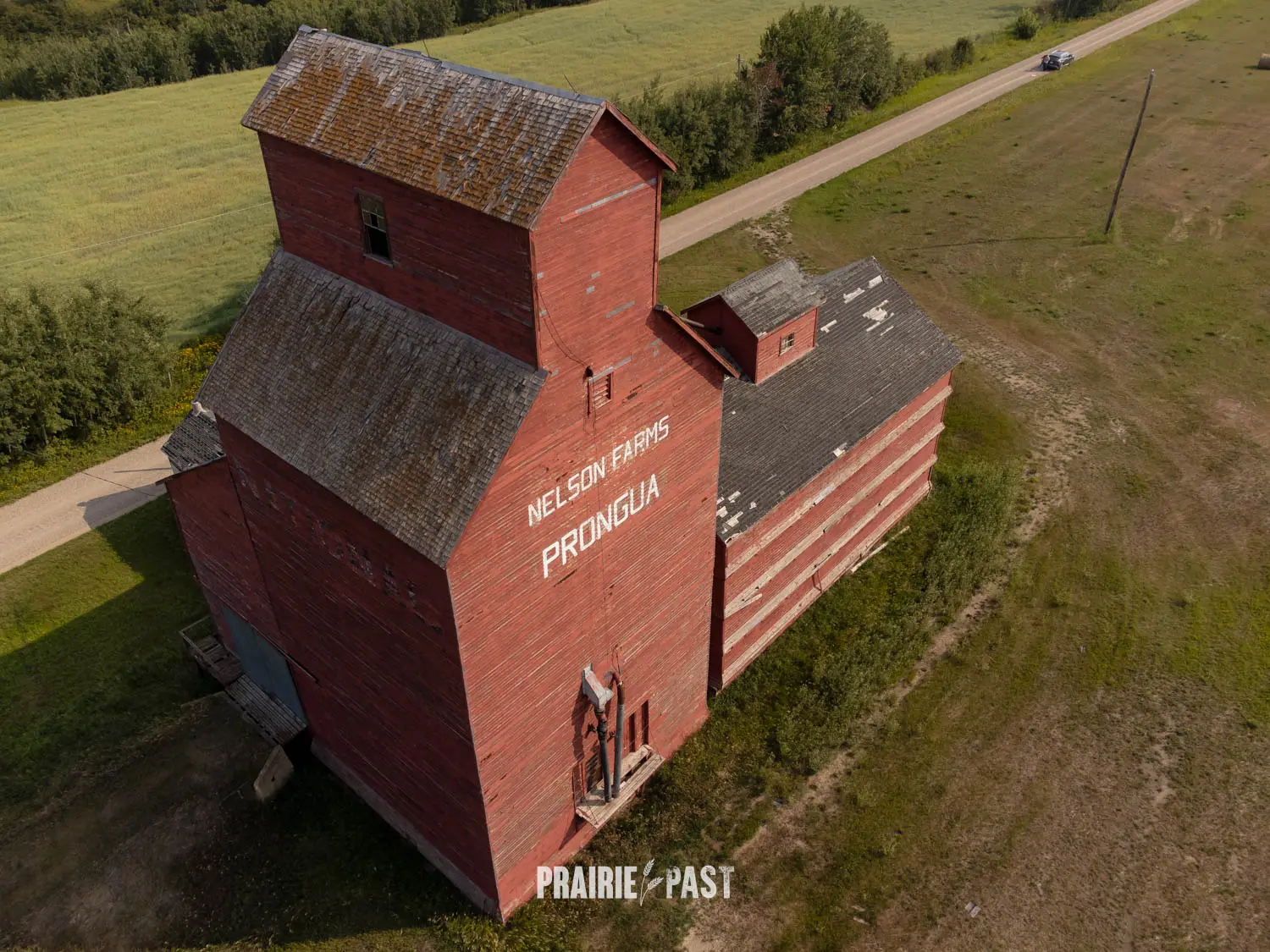
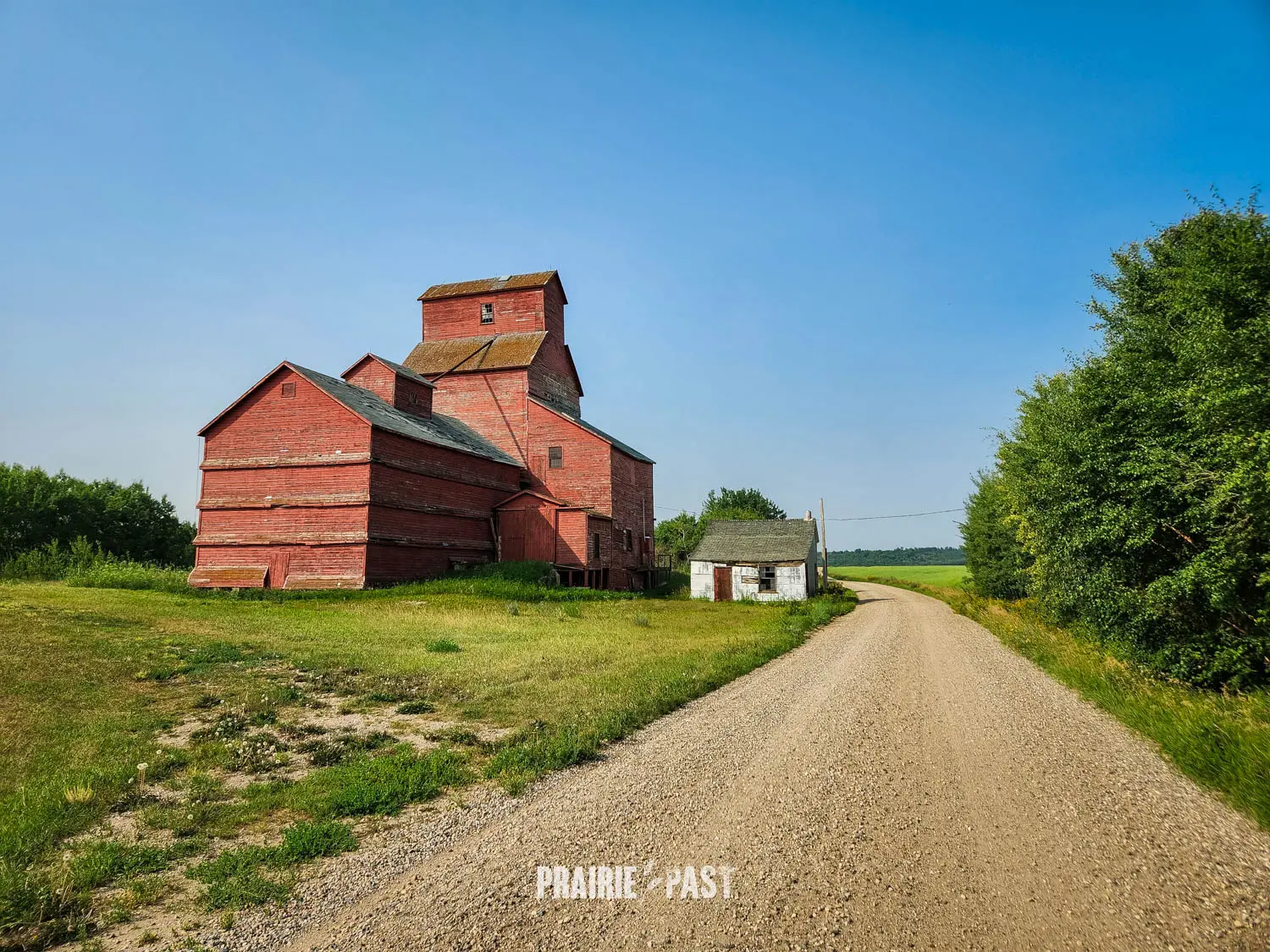
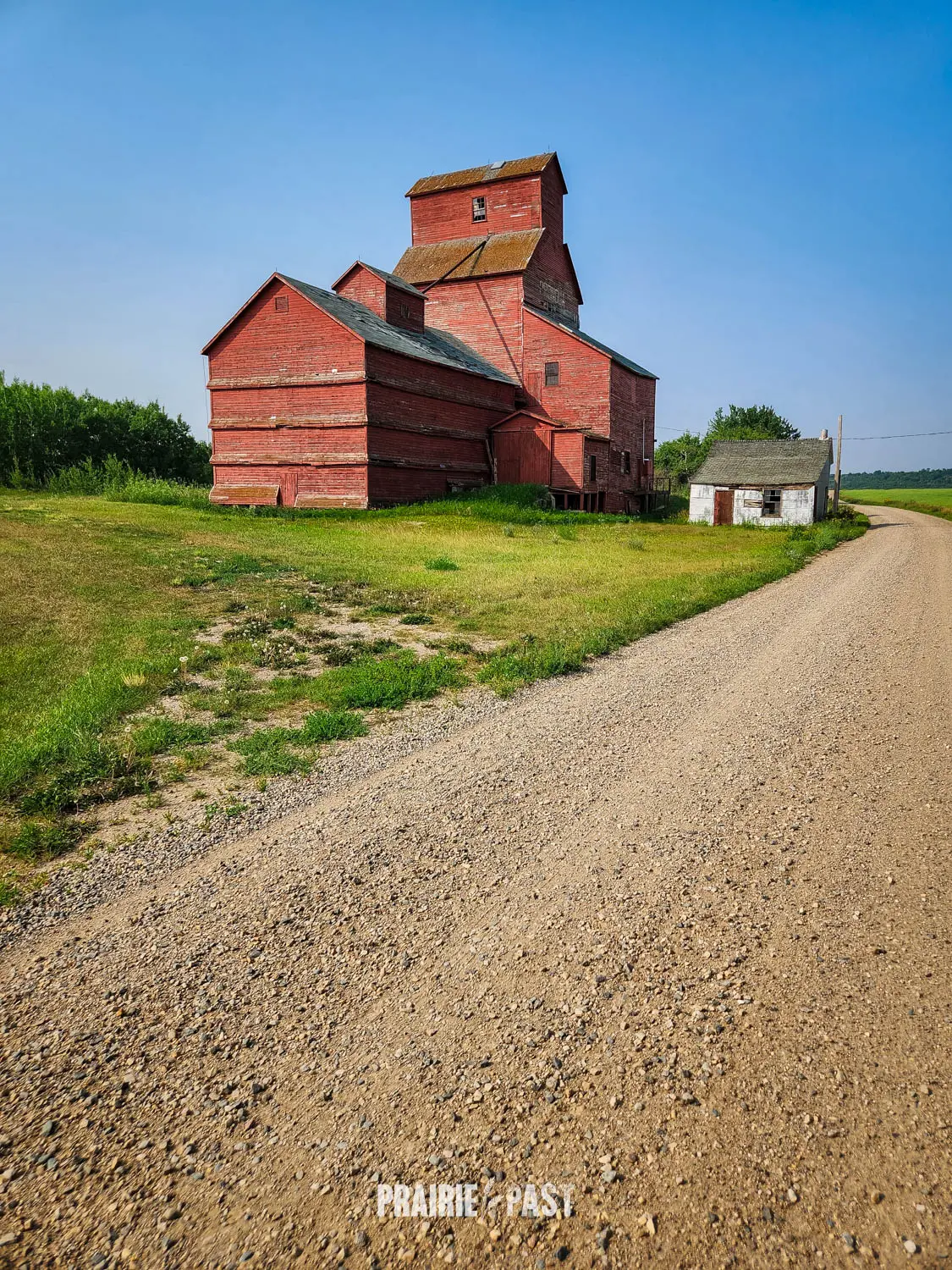
Driving across the Saskatchewan prairies, it’s hard to miss the towering silhouettes of old wooden grain elevators. Just off the tracks at Prongua, Saskatchewan, one such elevator still stands, weathered and silent, marking the spot where a small but vibrant farming community once thrived.
Prongua was established as a rail siding on one of the Saskatchewan branch lines built during the early 20th-century agricultural boom. Like many rural points across the province, its existence revolved around the railway and the grain elevator that soon followed.
Built by the Saskatchewan Wheat Pool, the elevator served as the primary hub for local farmers. Here, grain was trucked in, weighed, graded, stored, and shipped by rail to markets across the country. For decades, this single wooden structure played a vital role in connecting prairie agriculture to the world.
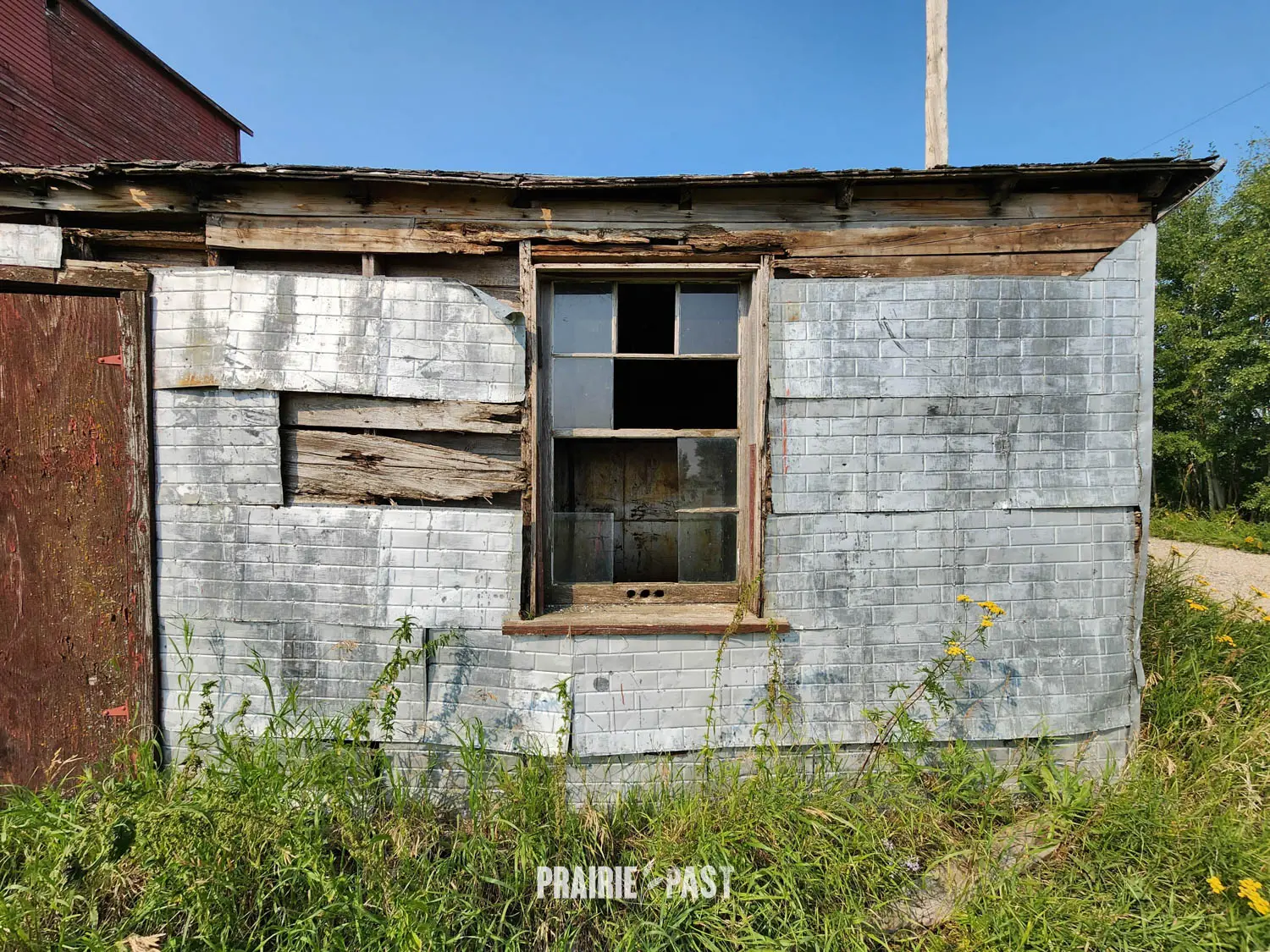
By the mid- to late-20th century, major changes swept across Saskatchewan's grain industry. Farm operations grew larger, transportation improved, and centralized high-throughput elevators began replacing the old wooden ones. As elevators closed one by one, rail lines lost traffic and communities shrank. Prongua was no exception. The railway stop disappeared, families moved on, and many of the buildings once surrounding the elevator vanished from the landscape.
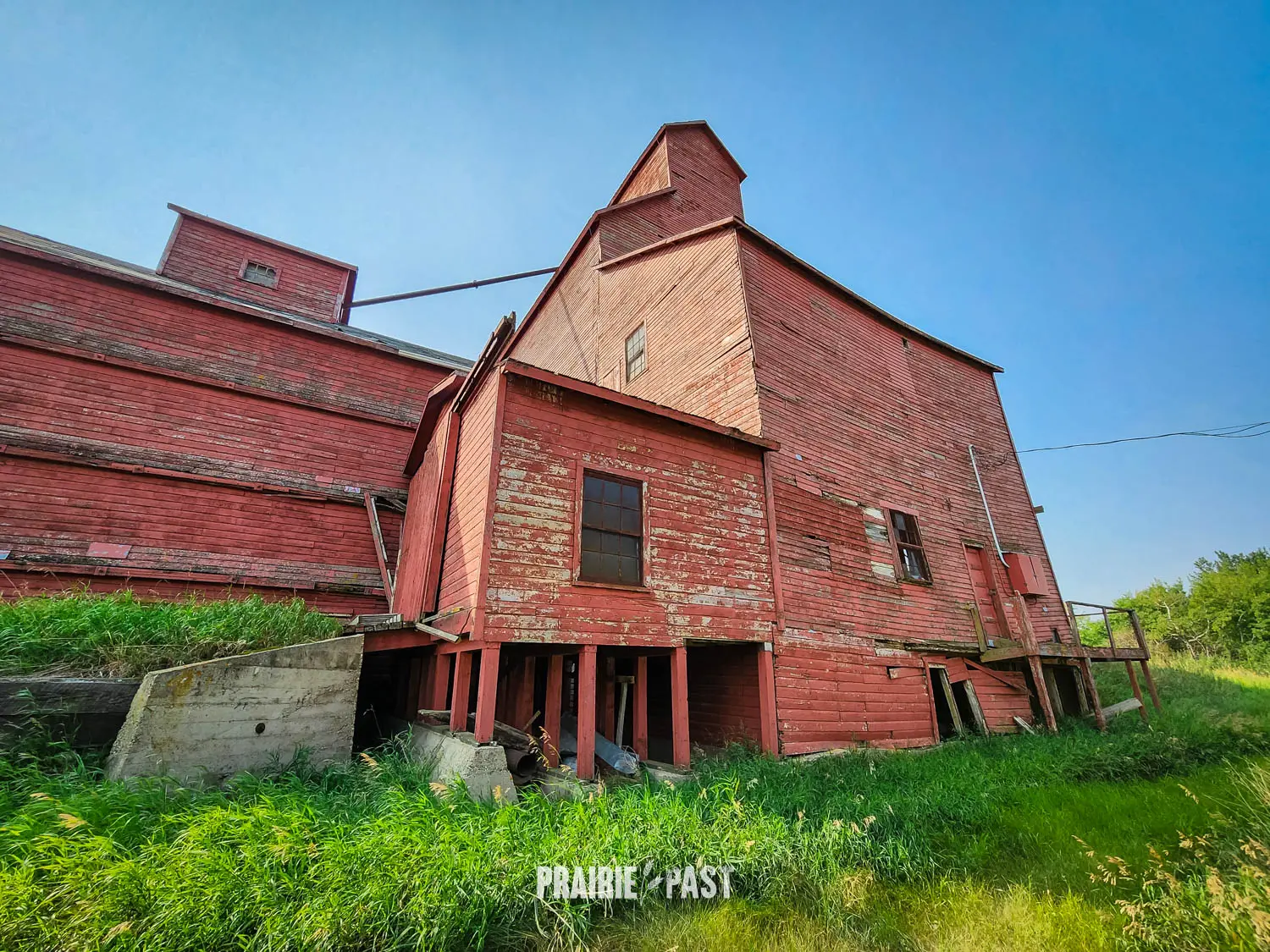
The Prongua elevator appears to be privately owned today - likely used by a local farmer. For explorers, photographers, and history lovers, it represents both a beautiful and bittersweet piece of Saskatchewan’s past. While many wooden elevators have been demolished, Prongua’s still endures, fragile yet iconic against the open prairie sky.